If Brazil is on your roadmap, this is the most useful evening you can spend before you commit a budget to it.
Dear founder,
Maybe it started with a number in your analytics. A steady trickle of visitors from São Paulo. A few sign-ups paid with Brazilian cards. A reseller writing in to ask for a Portuguese version. Or maybe your board simply asked the question every growing company hears sooner or later: "What about Brazil?"
It is a good question. Brazil has 213 million people, the largest economy in Latin America and an e-commerce market that reached R$ 204.3 billion in 2024. In April 2026, 93% of Brazilian adults used Pix, the instant payment system that now carries a larger share of online purchase value than credit cards.
And yet, foreign companies that do well everywhere else stall here all the time. Not because Brazil is hard. Because Brazil is different, and nobody tells you how until you have already paid for the lesson.
The lessons most companies pay for
Here is what usually happens when a company treats Brazil as "the same market, in Portuguese":
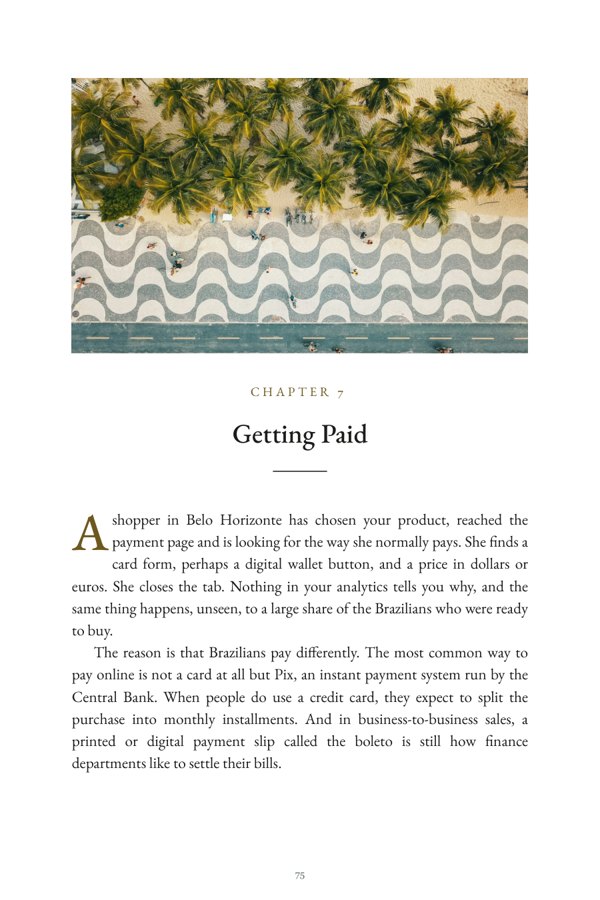
- The checkout only takes international cards. Brazilians who wanted to pay with Pix or in installments leave at the last step.
- Prices are converted from dollars and land on numbers no Brazilian would ever see on a price tag.
- A corporate customer asks for a nota fiscal, and nobody on the team knows what it is or who can issue one.
- The company opens a Brazilian subsidiary first and asks questions later, then discovers fixed monthly costs, an accountant it cannot do without, and a tax regime it is not allowed to use.
- Money is sent to Brazil without the Central Bank registration that later allows profits to go back home.
- Someone else registers the brand name in Brazil first.
None of these mistakes is dramatic on its own. Together they cost months, money and, worst of all, the conclusion that "Brazil doesn't work for us" when it was the plan that didn't work.
Why the information you need is so hard to find
The rules exist. They are spread across the Central Bank, the Federal Revenue, consumer law, labor law and a tax reform that runs from 2026 to 2033, most of it in Portuguese and written for people who already live here. Lawyers and accountants can answer each piece, but they charge by the hour and they answer the question you ask. The hard part is knowing which questions to ask, and in what order.
That is exactly what this book gives you: the whole picture, in the order you will face it, written for a foreign businessperson who needs to make decisions, not pass an exam.
Introducing Doing Business in Brazil
I have spent more than a decade helping foreign companies understand and enter the Brazilian market, from the first question to the first sale. This book is everything I would tell you over coffee if you asked, "What do we need to know before we go into Brazil?" Only more complete, with official sources, and organized so you can act on it.
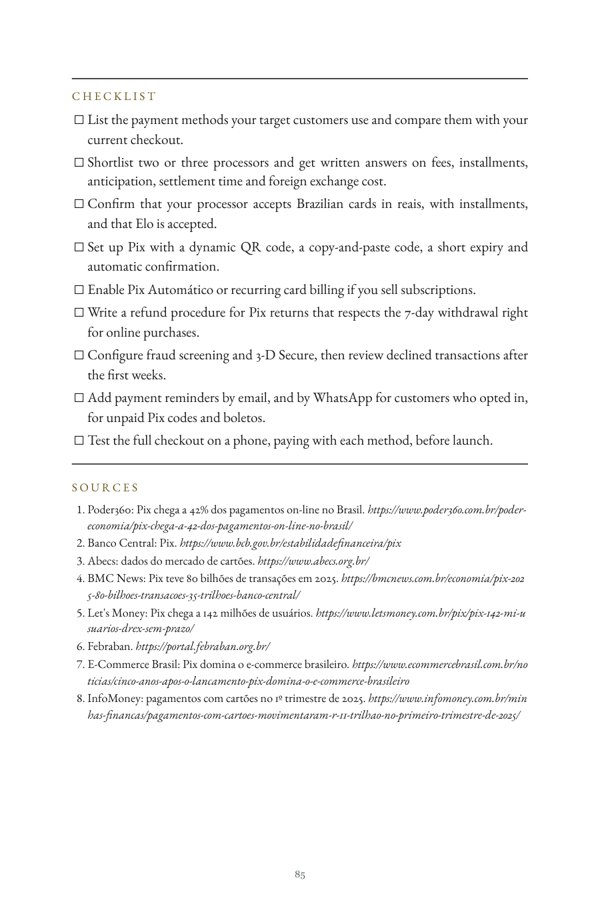
It is not a collection of blog posts. It was written as a book: fifteen chapters in six parts that follow the real sequence of decisions, each one with worked examples of foreign companies facing the same choice you face, the key decisions you need to make, and a checklist you can hand to your team on Monday morning.
Paulo Wesley